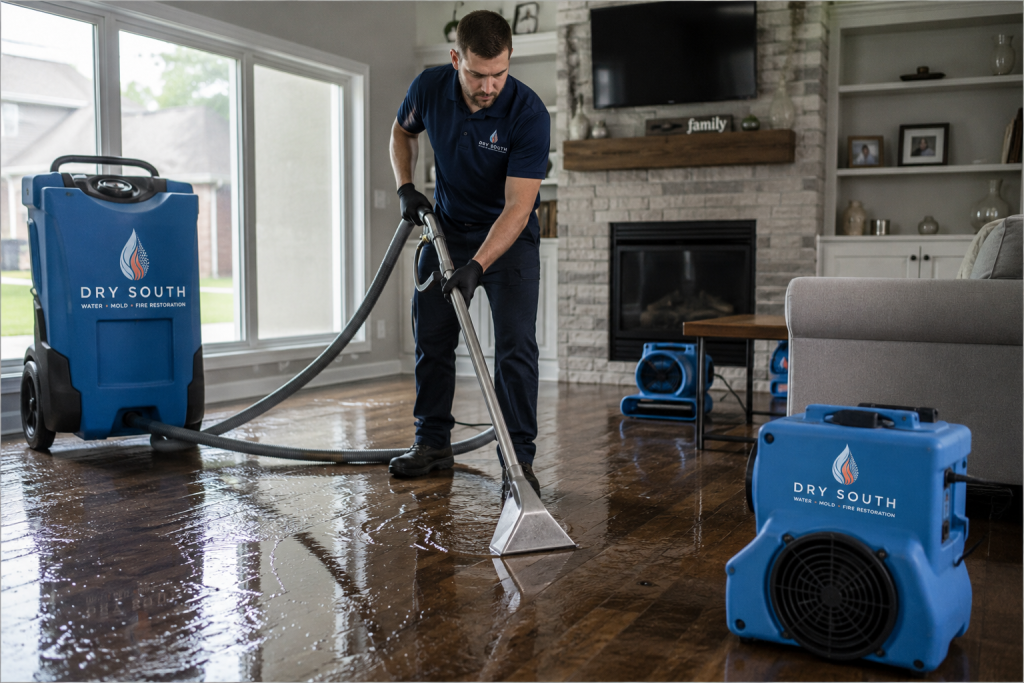
A pipe burst at 2 a.m. Here is exactly what to do in the first thirty minutes.
Most of the damage we invoice for was not caused by the burst. It was caused by the ninety minutes after it, when nobody was sure what to touch first.
A half-inch supply line under a sink moves roughly nine gallons a minute. By the time you have found a torch and figured out where the shut-off valve lives, the water is already under the skirting board and travelling along the joists into rooms you have not looked at yet. Drywall wicks upward. Water moves sideways. Neither of those things wait for morning.
What follows is the sequence our crews run when they walk into a live escape of water — condensed into what you can safely do yourself while we are en route.
Electricity before water, always
If water has reached an outlet, an extension lead, or the floor of a room with a live appliance, do not walk in. Kill the breaker for that circuit from a dry position. If the consumer unit itself is in the affected area, stay out and tell the dispatcher when you call — we bring an electrician on jobs like that.
Shut the main, then drain the line
Closing the stopcock stops the supply, but the pipework above it is still full. Open the lowest tap in the property — usually an outside tap or a ground-floor sink — and let gravity empty the system. Otherwise the remaining water in the pipes keeps feeding the leak for several more minutes.
If you cannot find the stopcock, it is almost always within a metre of where the mains enters the building: under the kitchen sink, in a downstairs cupboard, or in the garage on the wall shared with the street.
Get the contents up off the floor
Furniture legs are where the expensive damage hides. Stained wood legs bleed into wet carpet within hours and the mark does not come out — the carpet gets replaced for the sake of a sofa nobody moved. Slide squares of kitchen foil or plastic lids under every leg, or lift the piece entirely.
- Lift first: rugs, cardboard boxes, anything with dye in it.
- Then protect: furniture legs, radiator covers, skirting-level electronics.
- Leave alone: sagging ceilings. A bulging ceiling holds a lot of weight and it is not your job to be under it.
Then stop, and let the drying be professional
Fans blowing across a wet carpet feel productive and, without dehumidification, they simply move moisture into the drywall and into the air of the next room. Extraction, air movement and dehumidification have to happen together, and the equipment has to stay until moisture readings — not appearances — say the structure is dry.