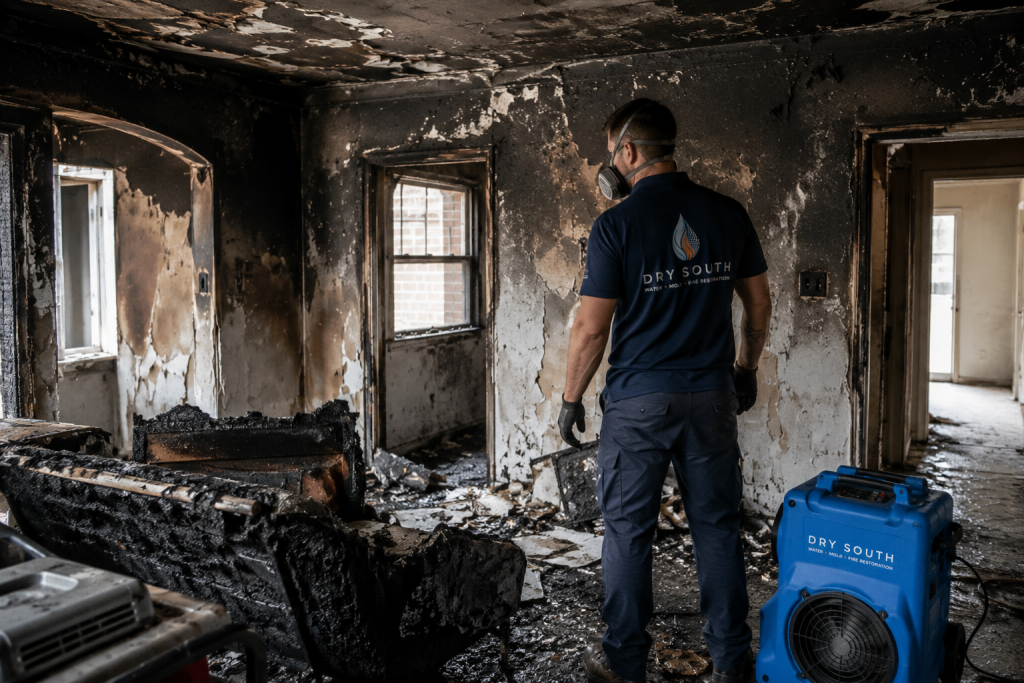
Why the smoke smell keeps coming back every time it rains
soot is not dust. It is an oily, acidic residue that bonds to whatever it lands on, and it has a habit of reappearing on humid days months after a room has been scrubbed, painted and declared finished.
We take these calls in the same week every year — the first properly humid stretch after a spring fire. The owner is furious, convinced the cleaning failed. Usually it did not fail. It just did not go where the smoke went.
Smoke follows the air, and air follows the vents
Heat drives smoke into every negative-pressure gap in a building: the return air ducts, the cavity behind a kitchen cabinet, the underside of a countertop, the top edge of a door frame. Clean only the burnt room and you have left the source of the odour in the parts of the house that actively push air back at you.
Why humidity brings it back
Smoke residue is hygroscopic — it pulls moisture from the air. When indoor humidity rises, the residue takes it in, becomes volatile again, and re-releases the compounds your nose recognised on the first night. That is why the smell is loudest in July and quietest in a dry, air-conditioned January.
What actually removes it
The specificity of those answers tells you whether the smell comes back next summer.
- Source removal first. Charred material is not cleanable. It leaves the building.
- HEPA and dry-sponge the residue before any wet cleaning — water spreads soot into porous surfaces.
- Duct cleaning if the system ran at any point while the property was smoky.
- Sealing the surfaces that cannot be replaced, so the remaining residue is locked away from the air.